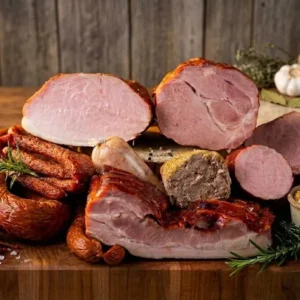
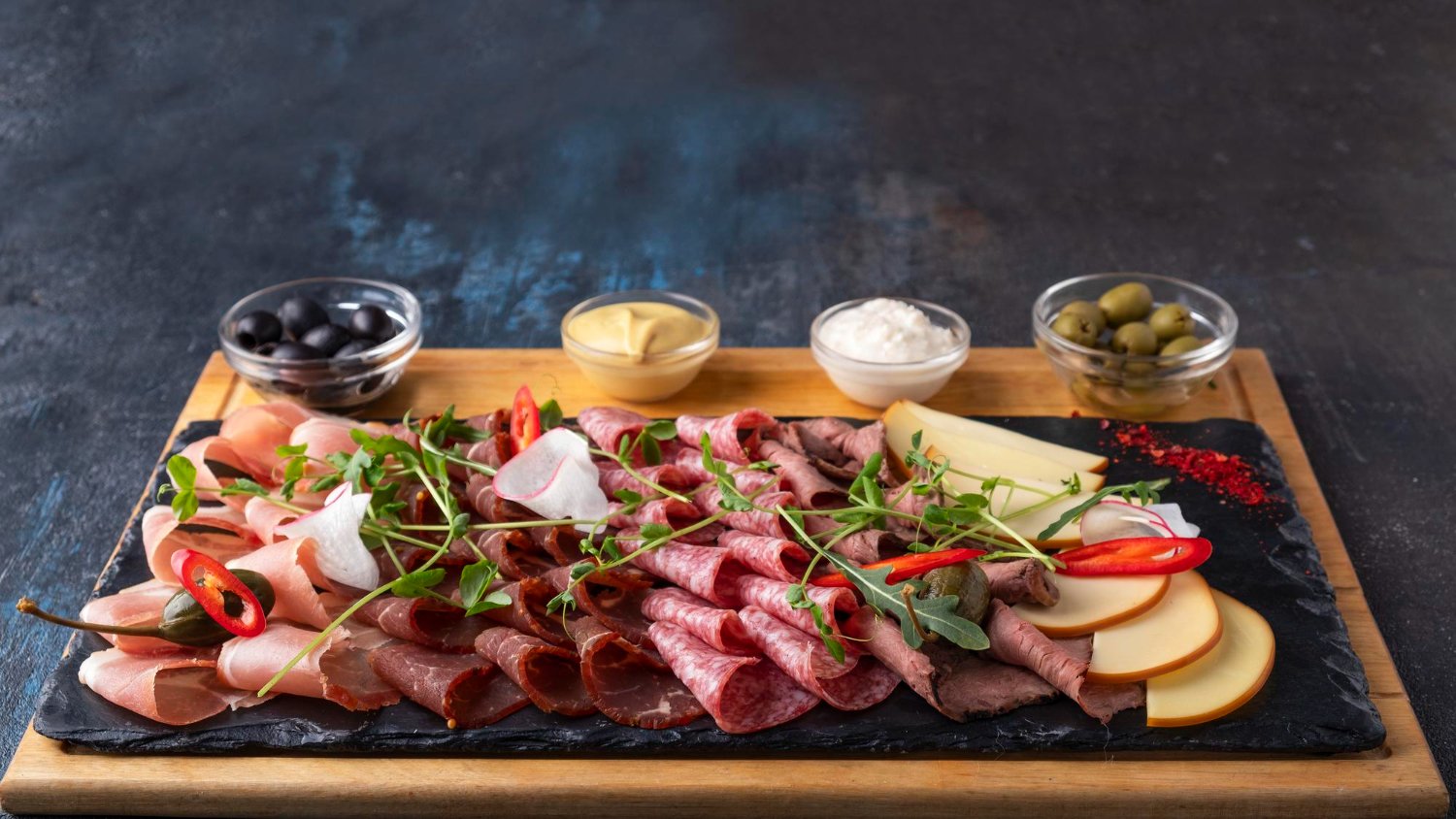
The most important thing is variety, not the number of products. For a homemade charcuterie board, four to six types of cured meats are usually enough. A larger arrangement for a party can include eight or more varieties, as long as each one brings something different. Repeating several similar hams or sausages with almost identical flavour profiles does not make the board more diverse – it only makes it unnecessarily overloaded.
Which cured meats should you choose, how should you slice them and what should you serve them with? The guide below will help you prepare a board that is visually appealing, convenient for your guests and, above all, perfectly balanced in flavour.
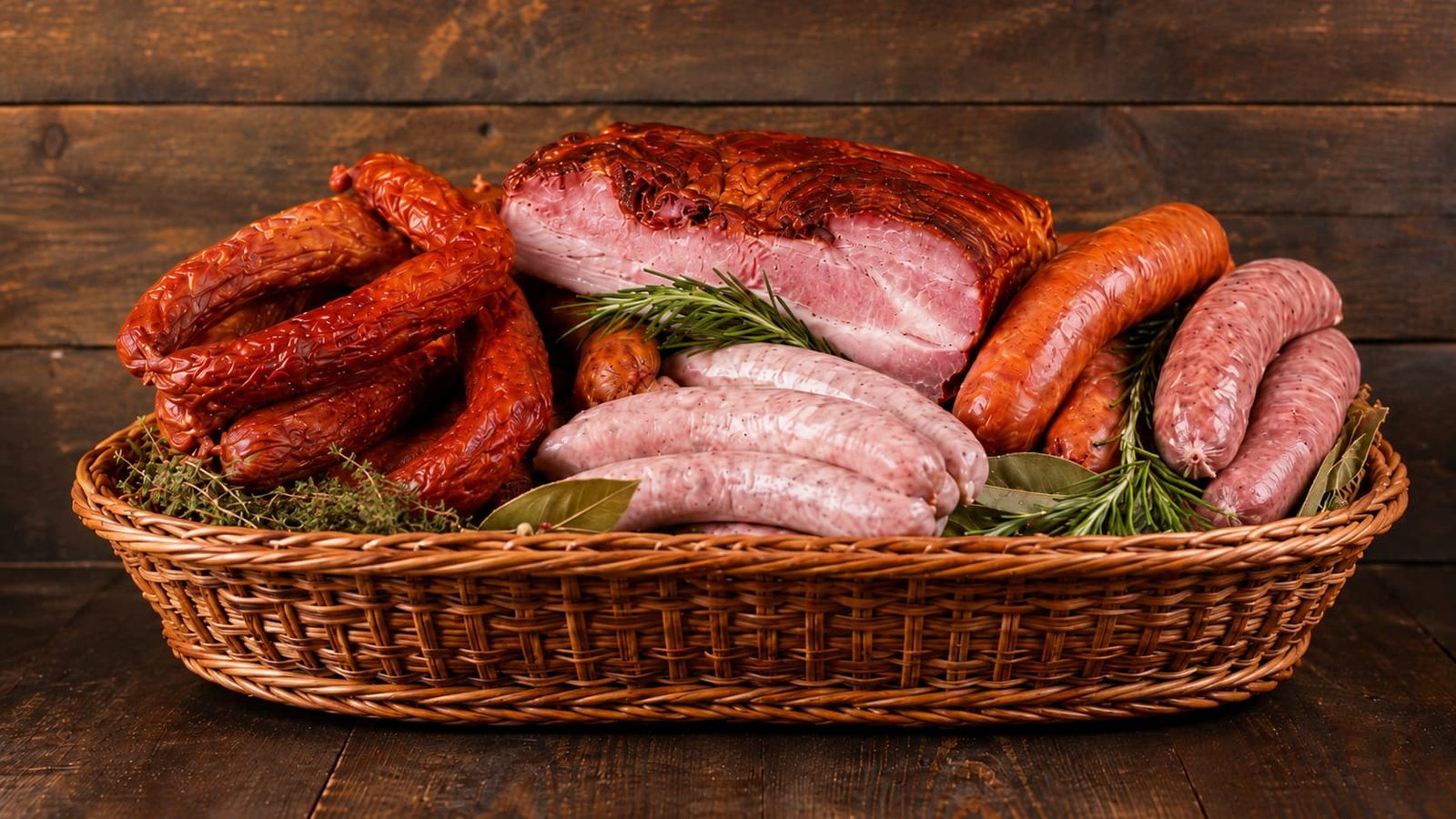
The easiest way to create a well-balanced charcuterie board is to follow specific categories. Instead of choosing products based only on their appearance, it is worth selecting one or two representatives from several different groups.
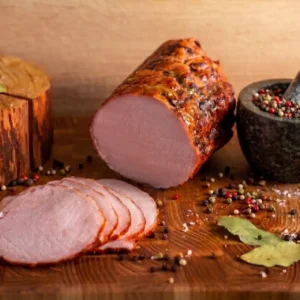
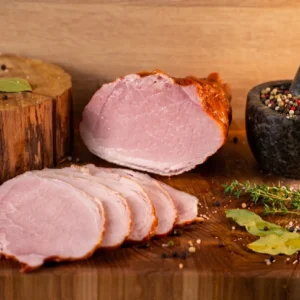
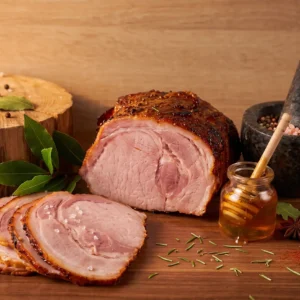
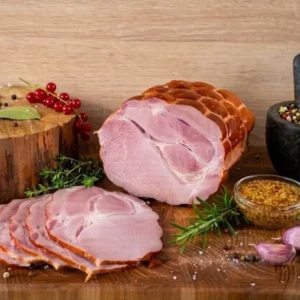
The first group consists of milder smoked meats, such as ham, pork loin or chicken fillet. They are usually more delicate, easy to serve and familiar to most guests. They provide a safe foundation for the entire composition.
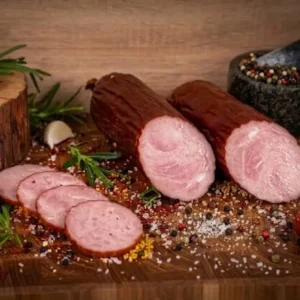
The second group consists of sliced sausages. They can be finely, medium or coarsely ground, cooked, baked, smoked or dried. It is precisely these differences in preparation methods that make two pork sausages taste completely different.
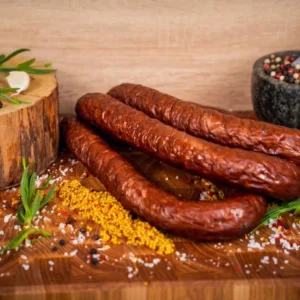
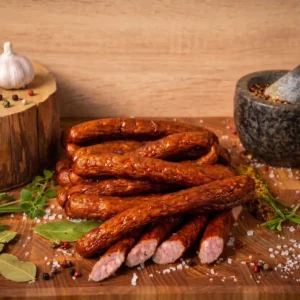
The third category includes firmer, semi-dried products such as kabanos and Krakowska sausage. They add a more distinctive texture to the composition and are very convenient to eat without using cutlery.
The fourth element should be a product with a more distinctive character. It can be a sausage with added beef, a juniper-flavoured product, smoked bacon or smoked pork neck. However, it is best to limit the selection to one or two intense flavours so they do not overpower the other ingredients.
A great addition to the charcuterie board can be pâté, lard with cracklings or another spreadable product for bread. Such an element changes the tasting experience and makes the board more varied rather than monotonous.
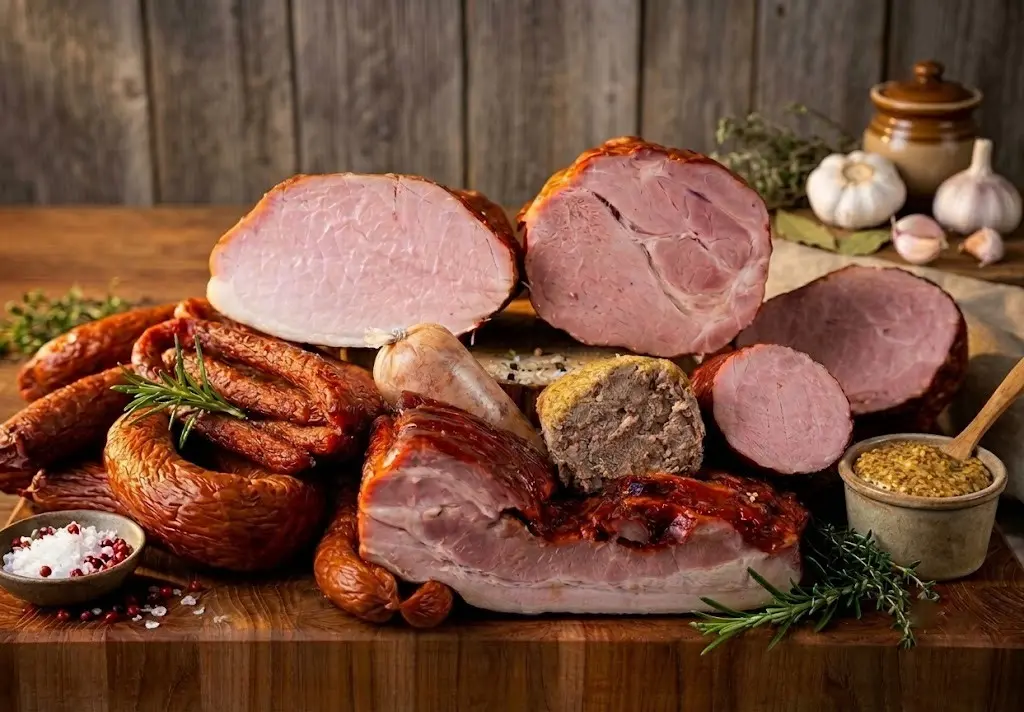
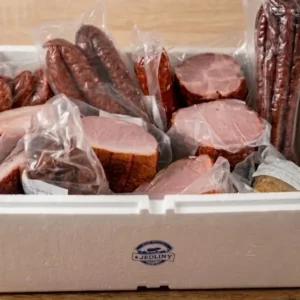
It was created especially for larger gatherings and charcuterie boards. The set includes, among other things, different types of sausages, kabanos, hams, bacon, smoked pork neck and pâté, so there is no need to put together every element separately.
Most charcuterie boards should include at least one milder product. Not every guest enjoys strongly seasoned, fatty or intensely smoked meats. Ham or pork loin are a great starting point, as they pair well with both classic accompaniments and more modern touches.
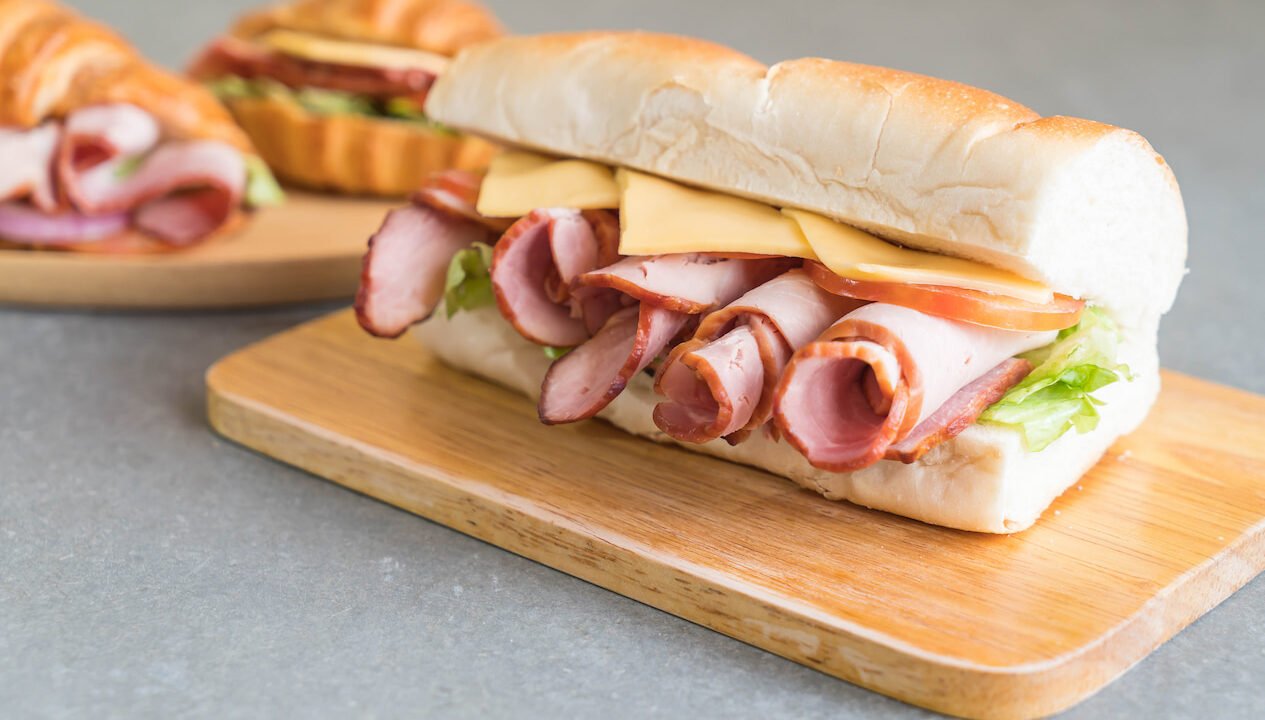
Ham is best sliced as thinly as possible. There is no need to arrange the slices flat on top of one another. They look much more attractive when gently rolled, folded in half, or arranged in a loose wave. This makes it easier to take individual portions, while the product takes up more space on the board without creating a heavy, compact layer.
Pork loin can be sliced slightly thicker than ham, especially when it has a firm texture. It pairs well with French mustard, horseradish, pickled mushrooms, or onion chutney.
In the Wędliny z Jedliny range, this part of the composition can include products such as Family Ham, Smoked Ham, Ham with Fat, and Chimney-Smoked Pork Loin. The products differ in their form and character, so before purchasing, it is worth checking their exact ingredients and preparation methods.
They will create a calm, classic base for the charcuterie board. For a more rustic composition, you can choose Ham with Fat or Smoked Ham.
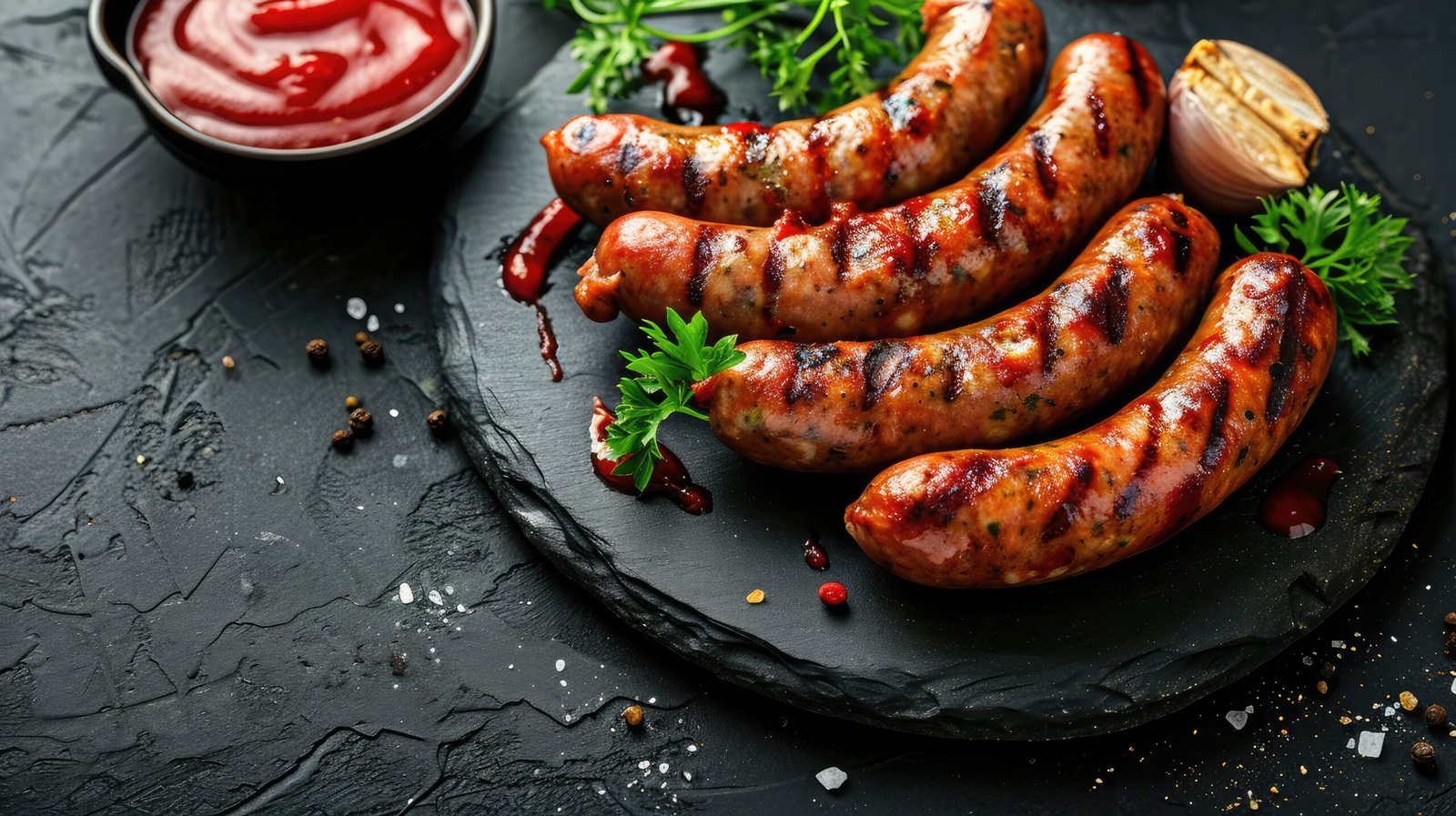
Sausages should not be treated as a single flavor category. What matters is not only the type of meat, but also the degree of grinding, the spices used, the preparation method, and the presence of additions such as cheese, garlic, beef, or junipe
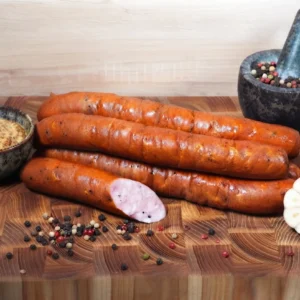
Krakowska sausage is coarsely ground, firm, and looks great when cut into even slices. It can be sliced in advance, as it keeps its shape and is easy to pick up from the board. Medium-ground sausages, such as traditional farmhouse sausage, pork loin sausage, or beef-roasted sausage, are best sliced at a slight angle. This creates larger slices that better showcase the cross-section and are easier to arrange alongside the other products.
It is not worth choosing three sausages with almost the same flavor profile. A much better effect can be achieved by combining one classic pork sausage, one firmer or dried sausage, and one with a distinctive addition.
A good example is the combination of Krakowska Sausage, Roasted Sausage with Beef, and Forest Sausage. The first one provides a firm, coarsely ground texture, the second combines pork with beef, while Forest Sausage contains juniper. Each of them therefore serves a different purpose on the charcuterie board.
They will work well in a composition where clear differences in flavor and texture are important.
Kabanos are one of the most practical elements of a charcuterie board. They do not require precise slicing, can be divided into shorter pieces, and guests can easily take them without using forks.
It is best not to cut all kabanos into identical pieces. Some can be left longer, while others can be broken or cut into smaller portions. An irregular arrangement looks more natural and highlights the casual, sharing character of the charcuterie board.
Kabanos are best placed along the edges or arranged in gentle curves between bowls of accompaniments. They can also be used to fill empty spaces between larger groups of cold cuts. However, they should not be placed on top of delicate ham, as firmer products can make it more difficult to pick up thin slices comfortably.
It can be used as a crunchy and flavorful element of the charcuterie board. The range also includes classic smoked and roasted kabanos.
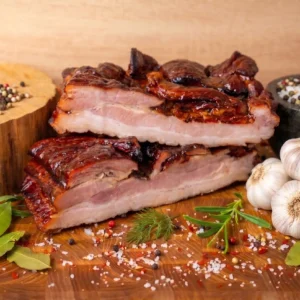
A good charcuterie board needs one richer, juicy product. This role is most often filled by bacon or smoked pork neck. Such products are more filling, so they do not need to be served in large quantities. A few carefully arranged slices are enough to add depth to the composition.
Bacon should be sliced slightly thicker than ham. Slices that are too thin may stick together and lose their texture. Smoked pork neck can be cut into half-slices, especially if a full slice is large and difficult to eat in one or two bites.
An interesting twist on a classic composition is Honey Bacon. Its slightly sweet flavor pairs well with mustard, pickles, and sourdough bread. However, it should not be combined with too many other sweet additions. When serving this type of product, it is better to avoid large amounts of chutneys, dried fruits, or honey-based sauces.
It can serve as the distinctive element of the entire charcuterie board. For a more classic selection, Smoked Bacon or Smoked Pork Neck will be a better choice.
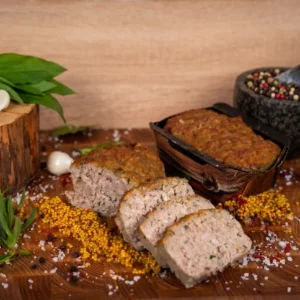
Pâté should not be sliced into very thin pieces or placed underneath heavier foods. It is much better to serve it in a small bowl, a ramekin, or on a small plate placed on the serving board.
Pâté should be served with a separate knife. It is also a good idea to place slices of baguette, toast, or small pieces of bread nearby. This way, guests do not have to carry the soft spread across the entire serving board.
Baked pâté with wild garlic pairs well with pickled cucumbers, marinated mushrooms, cranberries, and onion chutney. However, these accompaniments should be served in moderation so they do not overpower the flavour of the pâté itself.
It adds a different texture to the serving board than ham, sausages, and kabanos. It is also included in the Homemade Cold Cuts Box and the Party Cold Cuts Box.
The quantity depends primarily on the nature of the gathering. If the charcuterie board is one of several appetizers, you can assume around 80–120 grams of cured meats per person. If it is the main food served during an evening gathering, it is safer to prepare around 150–200 grams per guest.
You should also take into account the other elements of the menu. The presence of cheeses, salads, bread, hot appetizers, and dessert significantly reduces the amount of meat needed. On the other hand, at a gathering where the board is the only substantial food, a portion that is too small will quickly become noticeable.
It is better not to put everything out at once. Some of the cured meats can remain in the fridge and be added throughout the gathering. This helps maintain a better appearance of the products and reduces the amount of food left at room temperature for a long time.
It is best to start arranging the board with the largest items. First, place small bowls with mustard, pickles, olives, or spreads on the board. Next, arrange larger portions of ham, pork loin, and sausages. Finally, use kabanos sausages, bread, and small garnishes to fill in any empty spaces.
There is no need to aim for perfect symmetry. The board looks more natural when the products are arranged in irregular groups. However, each type of cold cut should have its own designated place. Mixing all the slices together makes it harder to identify the products and may be a problem for people who avoid certain ingredients.
Cold cuts should not be stacked in tall piles. Guests should be able to pick up a slice without having to move the other items. Thin slices of ham can be folded into loose waves, sausage can be arranged in a fan shape, and kabanos sausages can be placed in several shorter rows.
The board’s appearance can be enhanced with cucumbers, radishes, cherry tomatoes, fresh herbs, pickled peppers, or dark bread. The decorations should be edible and practical. Sprigs of herbs can highlight the overall presentation, but they should not cover the food.
A ready-made set is a practical solution when preparing a charcuterie board for a larger group or when it is difficult to decide which products will go well together. The Domowe Wędliny Box includes sausages, kabanos sausages, frankfurters, pâté, bacon, ham, and pork loin. This makes it a versatile base for both everyday meals and family gatherings.
The Party Cold Cuts Box is a more extensive selection designed for larger gatherings. It includes, among other things, ham, pork neck, bacon, several types of sausages, kabanos sausages, and pâté.
People with specific preferences can choose the Custom Box and select the contents themselves. This option works well when guests particularly enjoy certain products or when the board is intended to include only items with a specific flavor profile. The option to choose either a ready-made set or create your own selection is available in the Wędliny z Jedliny box category.
The first mistake is choosing only one type of product. Five similar types of sausages will not create a more interesting composition than three well-differentiated products.
The second problem is slicing all cold cuts in the same way. Delicate ham requires thin slices, firm sausage can be cut into thicker pieces, and kabanos sausages are best divided into convenient portions.
The third mistake is using too many decorations. A charcuterie board should primarily make eating easier. A large amount of herbs, scattered spices, or inedible decorations makes it harder to reach the products and takes up space needed for bread and other accompaniments.
The fourth mistake is putting out all the supplies at the beginning of the gathering. It is better to prepare a smaller, well-organized portion and refill the board as needed.
The final problem is a lack of contrast. Fatty cold cuts need acidic accompaniments, delicate products should be paired with more intense flavors, and soft products are worth combining with kabanos sausages, bread, or crunchy vegetables.
The best charcuterie board does not have to contain a dozen different products. Much more important is the right combination of flavors and textures.
Ready-made cured meat boxes They make it easier to create a larger charcuterie board, while the option to choose individual products allows the selection to be tailored to a specific occasion.
Weronika